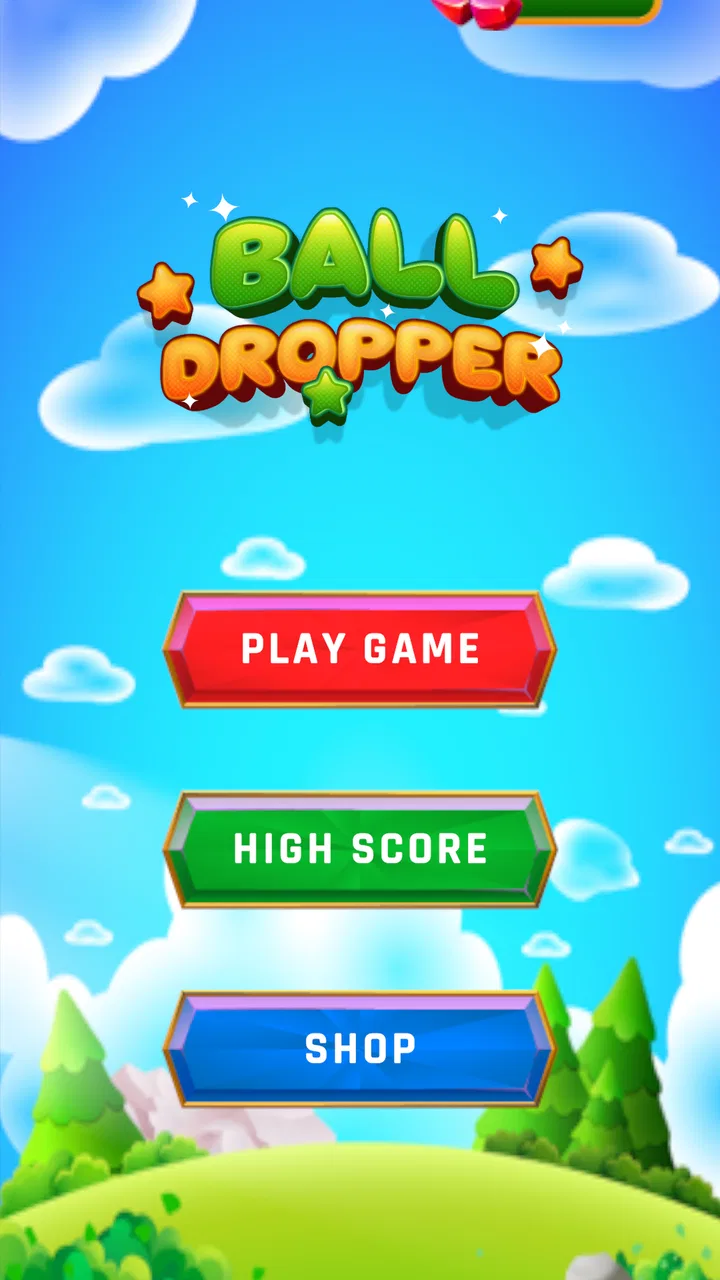
Ball Dropper
- 0.0
- Rating
- 10.00K
- Installs
- Free
- Price

 Analysis by App-foxy
I found Ball Dropper most appealing as a small, easy-to-start trivia game rather than as a deep, long-term challenge. Its central idea is simple: combine the visual satisfaction of dropping balls with the quick mental engagement of answering or handling trivia-style prompts. That makes it a natural choice for short breaks, waiting rooms, or a few relaxed minutes before bed. I would not present it as a replacement for a large quiz platform, but I do think it has a clear place for players who want something lighter and more playful.
The game is free to download, which removes the biggest barrier to trying it. It was created by NghiaTH1 and has passed the 10K+ install mark, giving it a modest but real presence among casual mobile games. The content rating is Everyone, so it is suitable for a broad audience. On Android, it requires version 7.0 or later, while the current release is 1.4. Those details make it accessible to many older devices as well as newer phones.
How the ball-and-trivia idea works in everyday play
What makes this game stand out is the contrast between a physical-looking action and a knowledge-based category. Trivia games usually rely on lists of questions, timed answers, scoreboards, or increasingly difficult rounds. Ball Dropper gives that familiar idea a more visual identity. Instead of feeling like a plain questionnaire, it is designed around the entertainment of watching balls fall and using that action as part of the experience.
You May Also Like

 AccuWeather: Weather Radar
AccuWeather Review: A Quick, Clear Forecast for Everyday Decisions
For everyday plans, the best forecast is the one you can understand quickly. AccuWeather makes rain timing, radar, and local conditions easy to act on, with a few trade-offs.

 Hill Climb Racing
Why Hill Climb Racing Still Turns Crashes Into One More Run
A tiny car, a bumpy hill and one more upgrade: Hill Climb Racing keeps resurfacing because its simple chaos makes every near-miss feel personal.

 AliExpress - Shopping App
AliExpress Makes Global Shopping Feel Personal, but Shoppers Bear the Risk
AliExpress turns a global marketplace into a pocket-sized discovery engine. Its reach is useful, its shopping loop compelling, and its trade-offs easy to miss.

 Lords Mobile: Kingdom Wars
Lords Mobile Is a Kingdom-Building Routine, Not a Quick Match
A case-by-case verdict on the building, battles, device demands, and social commitments that make Lords Mobile rewarding for some players and exhausting for others.

 PDF Scanner app - TapScanner
TapScanner Makes Paperwork Easier to Capture, Check, and Share
TapScanner makes scanning with a phone feel less like a rescue operation and more like a dependable step in getting work done. Its capture tools are useful, though not flawless.

 Block Blast!
 Shows How Much a Puzzle Game Can Leave Out
A quiet grid game shows why puzzle players increasingly value instant clarity, repeatable skill and low-pressure play—and where the genre still needs to catch up.
More From Our News Desk
View All News


That combination matters because trivia can become tiring when every round looks identical. A simple visual event gives the player something to follow between decisions. In my experience, this kind of presentation works best when I am not looking for an intense test of knowledge. I can play for a short while, enjoy the movement, and stop without feeling that I have abandoned a complicated campaign.
The strongest evidence in its favor is its low commitment. I do not need to prepare, learn a large rule set, or dedicate a long session. The concept is easy to understand from the name alone, and the game’s casual positioning makes it suitable for spontaneous play. If a friend handed me a phone with it open, I would expect to understand the basic appeal quickly.
That simplicity also makes it a reasonable option for families. Since it carries an Everyone rating, parents can consider it for younger players, while adults may enjoy using it as a gentle mental diversion. I would still recommend that parents review any in-app purchase flow before handing over a device, especially if children use a phone independently.
A practical use case for short breaks
Imagine waiting for a bus with only a few minutes available. A large quiz app may ask you to sign in, select a topic, or commit to a longer match. A conventional puzzle game may require concentration that is difficult in a noisy place. Ball Dropper fits that in-between moment better: it offers a recognizable trivia flavor without demanding the same preparation or attention as a full competitive session.
I can also see it working during a family gathering when people want a casual activity but do not want to organize teams or keep score on paper. The ball-dropping presentation gives the game a more visual, shared quality than a basic question list. It is not necessarily a party game in the formal sense, but its accessible concept makes it easier to pass around than a specialized trivia title.
Another useful scenario is a short wind-down routine. Some trivia apps encourage endless competition, streak maintenance, or aggressive score chasing. This one feels better suited to players who want a small dose of interaction without turning the session into a personal performance test. That is a meaningful distinction for anyone trying to avoid games that constantly demand another round.
Why the presentation helps the trivia category
Trivia games often succeed or fail on pacing. Even good questions can feel dull if the interface makes every answer look like a form. Ball Dropper’s visual premise gives the game a chance to make each moment feel more active. The falling-ball concept is not just a decorative label; it is the reason the title has a personality of its own.
For me, the appeal is less about proving that I know the most facts and more about the rhythm between thought and movement. I can consider the trivia element, watch the result unfold, and continue at a relaxed pace. That rhythm is especially useful for players who enjoy quiz content but lose interest in static interfaces.
There is also a psychological advantage to keeping the idea uncomplicated. When a game presents too many systems, rewards, menus, and modes, the trivia itself can become secondary. A focused ball-dropping concept has the potential to keep the experience approachable. I would recommend it first to someone who values immediate play over a large collection of features.
Small habits that make the experience more enjoyable
My first tip is to treat each session as a short activity rather than expecting a complete progression arc. The game’s greatest strength is its accessibility, and that strength is easier to appreciate when I play in brief bursts. Trying to force a long session can make a lightweight design feel repetitive sooner than it would during occasional use.
My second tip is to use it as a shared conversation starter. If another person is nearby, the trivia element can encourage quick guesses before the ball action resolves. This works particularly well with children or family members because the Everyone rating supports a broad audience. The game does not need to become a formal competition to be enjoyable.
A third practical point concerns spending. The game is free, but optional purchases range from $0.19 to $34.99 per item. That is a wide enough range that I would approach the purchase screen carefully rather than tapping through automatically. For a casual title whose main attraction is quick entertainment, I would begin with the free experience and only consider spending if the game consistently earns a place in my routine.
I would also avoid judging the game after one rushed tap. Its appeal depends on the relationship between the trivia activity and the visual drop, so it is worth giving the basic loop a few relaxed attempts. At the same time, I would not keep playing solely because I had already invested time. If the presentation does not make the questions more enjoyable for you, the game’s simplicity may not be enough to change your mind.
Where the game is less convincing
The same simplicity that makes Ball Dropper approachable can limit its staying power. Players who want extensive categories, detailed explanations, ranked competition, or a carefully structured learning path may find a dedicated trivia platform more satisfying. Those alternatives usually make their educational or competitive purpose clearer. Ball Dropper seems better suited to entertainment than to serious knowledge training.
There is also a potential repetition problem. A ball-dropping action can be pleasant, but visual novelty alone may not sustain interest indefinitely. If the trivia content does not keep feeling fresh, the game may become something I open occasionally rather than a title I return to every day. That is not a fatal flaw; it simply defines the kind of player who will appreciate it most.
Another limitation is the trade-off between accessibility and depth. A very simple game is welcoming to new players, but experienced trivia fans may want more control over difficulty or subject matter. When I choose a quiz game specifically to challenge myself, I usually prefer a title built around detailed question selection and measurable improvement. Ball Dropper is a weaker fit for that purpose because its identity is more playful than academic.
The in-app purchase range deserves a second look from a value perspective. Free access is useful, but optional items reaching $34.99 can feel disproportionate for players who see the game as a tiny break-time activity. I would not assume that spending is necessary to enjoy the basic concept, and I would set a clear personal limit before exploring purchases. Families should use device-level purchase controls if children may access the store.
Device compatibility is fairly broad because the minimum requirement is Android 7.0, but anyone using a phone below that version will not be able to install it. For supported devices, I would still keep expectations realistic: this is a compact casual game, not a visually ambitious production intended to showcase high-end hardware. Its value comes from the idea and the ease of play, not from technical spectacle.
Who should choose it over a typical quiz app?
I would recommend Ball Dropper to players who want trivia with a little more visual motion than a standard question-and-answer interface. It is a good candidate for casual users, families, and people who prefer games that explain themselves quickly. It also suits anyone who enjoys trying small free titles without making a major commitment.
It is less suitable for someone studying facts, preparing for a formal quiz, or seeking a serious competitive ladder. In those situations, a focused educational app or a mature multiplayer trivia game would probably be the better choice. Those alternatives are designed around progress, accuracy, and long-term challenge, while this game’s appeal is its relaxed entertainment value.
I would also skip it if you need a strong story, character development, or a complex strategy layer. The ball-and-trivia premise is the main event. Players who expect a campaign or a wide range of interconnected systems may interpret that focus as a lack of content. Personally, I see it as a deliberately narrow experience, but that only works when the player wants something narrow.
For younger users, the Everyone rating is reassuring, but adult supervision remains sensible around optional purchases. The free entry point makes it easy to test together, and that is the approach I would take: install it, explore the basic loop, and decide based on whether the visual presentation adds enough enjoyment to the trivia.
My verdict after weighing the trade-offs
Ball Dropper succeeds because it gives a familiar trivia category a simple physical hook. I like that it can be picked up quickly, used in short sessions, and shared with a broad range of players. The free price and accessible Android requirement make experimentation easy, while the current version, 1.4, shows that the game has continued beyond its initial release on Aug 26, 2025.
My reservation is equally clear: this is unlikely to satisfy players searching for deep quiz systems or a substantial long-term challenge. Its best use is as a compact diversion, not as a complete trivia education tool. The optional purchase range also means I would keep spending under control and judge the free experience on its own merits.
Overall, I would recommend it to a friend who said, “I want a quick trivia game, but I do not want another complicated app.” The ball-dropping idea gives the experience a distinctive flavor, and the Everyone rating makes it easy to suggest for mixed-age households. Choose it for quick, playful trivia sessions; choose a dedicated quiz platform when depth, competition, or structured learning matters more.
That is where the game feels most honest. It does not need to compete with every trivia alternative. For the right player, its value is the small moment of interaction: open it, make a few choices, enjoy the visual result, and move on with the day. As a free game from NghiaTH1, it is worth trying if that modest, accessible rhythm sounds more appealing than a demanding quiz marathon.
FAQs for Ball Dropper
01What is Ball Dropper and how do you play it?
Ball Dropper is a casual physics-based game centered on dropping or guiding balls through obstacles toward a target area. Gameplay is generally easy to understand: you choose the right position, release the ball, and observe how it bounces, falls, or interacts with the level. As stages progress, timing, positioning, and planning become increasingly important.
02Is Ball Dropper free to download and play?
Ball Dropper is typically available as a free download, allowing players to try the core gameplay without an upfront purchase. However, the app may include advertising, optional in-app purchases, or other monetization features depending on the version and platform. Before downloading, check the store listing for current pricing, purchase details, and any regional differences.
03Does Ball Dropper require an internet connection?
The basic levels of Ball Dropper may be playable without a constant internet connection, which makes it suitable for short sessions while traveling or when mobile data is unavailable. Nevertheless, an internet connection may be needed for advertisements, analytics, cloud features, updates, or in-app purchases. Availability of offline play can vary between versions.
04Is Ball Dropper suitable for children?
Ball Dropper uses simple controls and generally focuses on non-violent, puzzle-like physics gameplay, making it approachable for many younger players. Parents should still review the app’s age rating, advertising policy, and in-app purchase options before installation. If children use the device, parental controls are recommended to prevent accidental purchases or exposure to unsuitable advertisements.
05Are there many levels, and does the difficulty increase?
Ball Dropper is designed around repeated short challenges, with later stages usually introducing more complicated layouts, moving elements, narrower targets, or additional obstacles. This gradual increase keeps the game accessible at the beginning while giving experienced players more demanding puzzles to solve. The exact number of levels and available modes may differ according to the current release.
Pros
- Simple controls make it easy to start playing immediately.
- Short rounds are ideal for quick breaks or casual sessions.
- Physics-based drops create varied outcomes from similar moves.
- Bright visuals make the gameplay easy to follow on small screens.
- Works well for players who prefer relaxed
- low-pressure challenges.
Cons
- Gameplay may feel repetitive after extended sessions.
- Progression can seem limited for experienced players.
- Some levels may depend more on luck than careful planning.
- Small interface elements may be inconvenient on compact screens.
- Ads may interrupt play or reduce the overall flow.

Ball Dropper
Gallery